
Italy is internationally famous for its food, fashion, art, and family traditions. But another fascinating aspect of Italian culture is the way people express affection, gratitude, and social connection through gifts.
Gift-giving in Italy is closely connected to family relationships, religious celebrations, regional customs, and important milestones in life. A present can be a beautifully wrapped box of chocolates, a bottle of wine, a handmade object, an elegant piece of jewellery, or simply something small that shows someone has been remembered.
Unlike countries where Christmas is the only major gift-giving season, Italy has several distinctive occasions throughout the year. Christmas is especially important, but Easter, birthdays, weddings, name days, graduations, and the traditional January celebration of La Befana also create opportunities to exchange presents.
What makes Italy particularly interesting is that gift-giving customs are not identical throughout the country. Northern, central, and southern Italy have different regional traditions, and some families preserve customs that have existed for centuries.
Understanding these traditions provides a fascinating insight into Italian society and helps explain why a thoughtful present can carry much more meaning than its monetary value.
1. When Do Italians Give Gifts?
Christmas: Natale (December 24–25)
Christmas is one of the most important gift-giving occasions in Italy.
Italian families traditionally celebrate Christmas Eve, known as La Vigilia di Natale, and Christmas Day, Natale, with family gatherings, festive meals, religious traditions, and exchanging presents.
The timing of gift exchanges varies between families and regions. Some open presents on the evening of December 24, while others wait until Christmas morning.
The familiar Christmas figure, Babbo Natale, is now widely associated with bringing presents to children. However, older regional traditions remain alive.
For example, some families in northern Italy associate Christmas gifts with the Christ Child, while others have additional gift-giving celebrations earlier in December.
Christmas gifts commonly include:
- Clothing, shoes, and fashion accessories.
- Perfumes and beauty products.
- Jewellery and watches.
- Books and educational gifts.
- Electronic devices.
- Toys and games for children.
- Food, wine, and gourmet gift baskets.
- Home decorations and kitchen accessories.
Food plays a particularly important role in Italian Christmas celebrations.
Traditional sweets such as panettone, pandoro, torrone, and regional biscuits are frequently given as presents or shared with visitors.
A beautifully packaged box of Italian chocolates or a regional speciality can be an excellent present, especially when visiting relatives or friends.
Christmas is also an important time for businesses to exchange gifts with employees, clients, and professional partners.
Santa Lucia: December 13
One of Italy's most charming regional gift-giving traditions is associated with Santa Lucia.
In Verona and several other areas of northern Italy, children traditionally receive sweets and presents from Saint Lucy during the night between December 12 and 13.
According to local tradition, Santa Lucia travels with her faithful donkey, bringing treats to well-behaved children and symbolic coal to those who have misbehaved.
The tradition is particularly important in Verona.
The Veneto regional tourism portal documents the historical Santa Lucia celebrations and the traditional market in Piazza Bra, where visitors can find sweets, handmade products, and other presents. (Regione del Veneto, IAT Verona, 2025).
veneto.eu
This tradition demonstrates how Italy's gift-giving culture can vary significantly from one region to another.
For children in some families, the festive season does not begin with Christmas Day. It begins with Santa Lucia.
La Befana: January 6
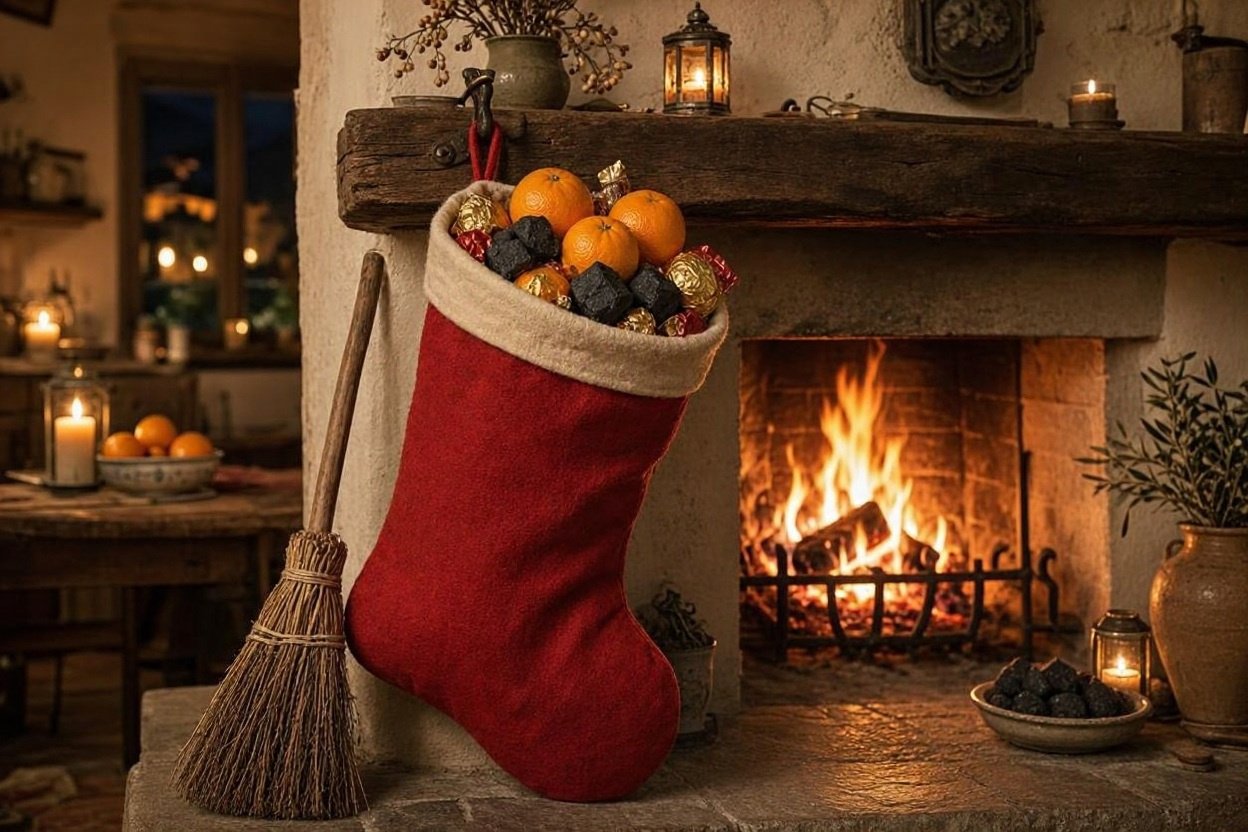
Perhaps the most distinctive Italian gift-giving tradition is La Befana.
Celebrated on January 6, the Feast of the Epiphany, La Befana is a traditional folklore character usually portrayed as an old woman flying on a broomstick.
On the night between January 5 and 6, she visits children and fills stockings with sweets, chocolates, small toys, and other treats.
Children who have behaved well traditionally receive sweets, while those who have misbehaved may find symbolic coal.
The story of La Befana combines Christian and older folk traditions.
According to the popular legend, the Three Wise Men invited an old woman to accompany them on their journey to find the baby Jesus. She declined because she was busy with household work. Later, regretting her decision, she began searching for the child, leaving gifts for children along the way.
The tradition has become an important part of Italian Christmas folklore.
The Italian national tourism portal, Italia.it, explains that the Befana tradition is associated with the closing of the Christmas season and the beginning of a new year. (ENIT / Italia.it, n.d.).
Italia.it+1
One particularly interesting destination is Urbania, in the Marche region, which celebrates La Befana with festivals, decorated streets, activities for children, and traditional sweets.
The celebration demonstrates how gifts can be connected to folklore, childhood memories, and community identity.
Easter: Pasqua
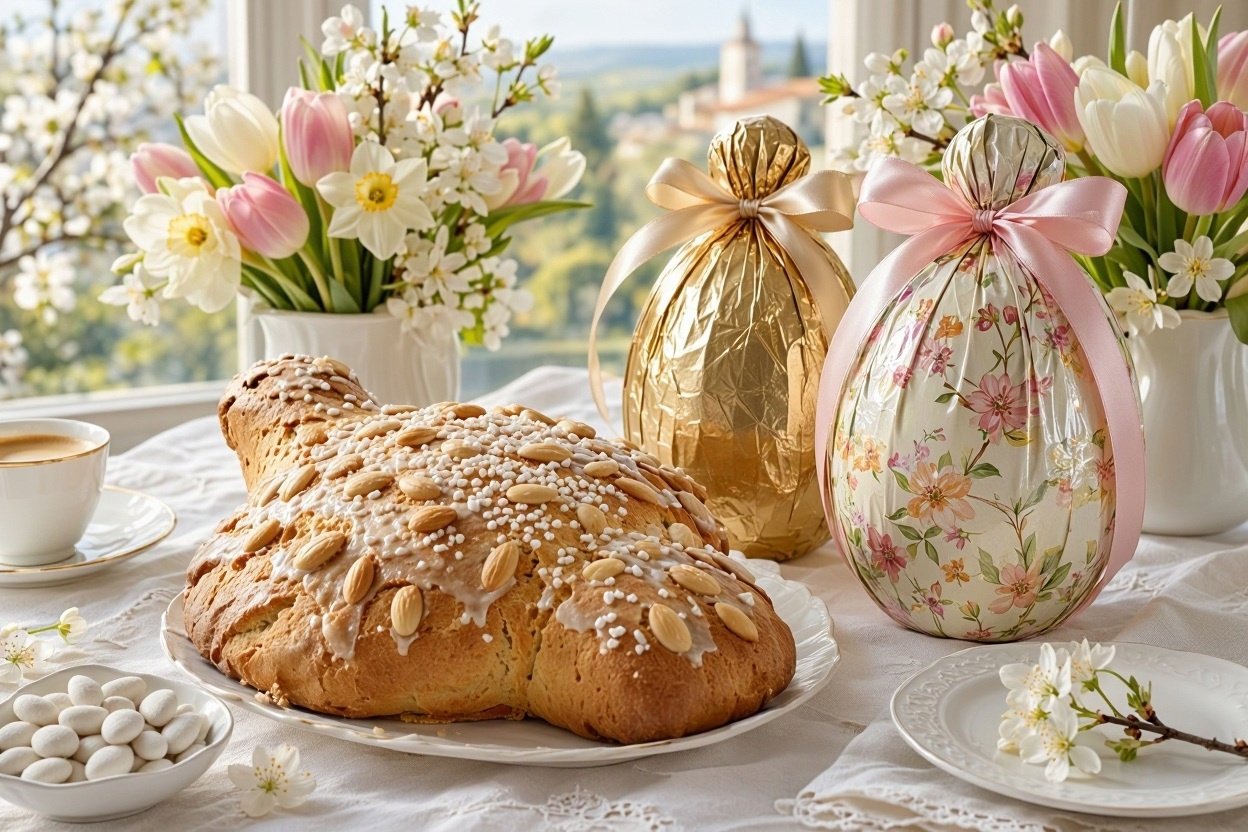
Easter is another important celebration in Italy, particularly for families with children.
One of the most recognisable Easter presents is the Uovo di Pasqua, a large chocolate egg traditionally wrapped in colourful foil.
Many chocolate Easter eggs contain a small surprise inside, making the experience of opening them particularly exciting for children.
The tradition is closely connected to the religious celebration of Easter and the symbolism of new life and renewal.
Italian families also enjoy traditional Easter foods, including:
- Colomba, a dove-shaped sweet bread.
- Decorated eggs.
- Chocolate eggs.
- Regional pastries.
- Traditional savoury dishes.
The official Rome tourism website describes the Roman Easter breakfast, where decorated eggs and chocolate eggs are part of the celebration. (Turismo Roma, n.d.).
Turismo Roma
Unlike Christmas, Easter is not universally a major present-exchange occasion for adults. Its gift-giving traditions are more strongly associated with sweets, chocolate, children, and family gatherings.
Birthdays and Name Days: Compleanno and Onomastico
Birthdays are widely celebrated in Italy, with presents often exchanged between family members, friends, and colleagues.
Typical birthday gifts include clothing, perfume, jewellery, handbags, books, flowers, and personal accessories.
However, Italy has another interesting tradition that many international readers may not know about: the Onomastico, or name day.
An onomastico is connected to the feast day of the saint after whom a person is named.
For example:
- March 19 is associated with San Giuseppe.
- June 24 is associated with San Giovanni Battista.
- October 4 is associated with San Francesco.
- December 13 is associated with Santa Lucia.
In families that observe this tradition, people may receive flowers, pastries, a houseplant, or a small present.
The expression Buon Onomastico is used to wish someone a happy name day.
The tradition is particularly established in some central and southern Italian communities, although it is not observed by every Italian family. (Iafelice, 2018).
La Gazzetta Italiana
Weddings and Graduations
Weddings are among the most meaningful gift-giving occasions in Italy.
A traditional Italian wedding gift is often money, presented in an envelope known as La Busta, although wedding registries and honeymoon contributions are also used.
A cash gift can help newlyweds with their new home, honeymoon, or future expenses.
The exact amount depends on the relationship with the couple, the guest's circumstances, and the type of celebration. It is not appropriate to assume that every Italian wedding follows the same financial expectations. (Micocci, 2025).
Money.it
Another famous wedding tradition is the Bomboniera.
This is a small keepsake given by the newlyweds to their guests as a gesture of gratitude.
Traditionally, it is accompanied by Confetti — sugar-coated almonds, not paper decorations.
These almonds are often presented in small decorative bags or boxes, together with a card carrying the couple's names and wedding date.
The tradition has a long history in Italy and is associated with good wishes and good fortune for the newly married couple. (Monfreda, 2021).
Visit Italy
Graduations are also significant occasions.
Graduates may receive jewellery, watches, money, books, travel experiences, or personalised presents to celebrate their academic achievements.
2. What Types of Gifts Are Popular in Italy?
Italian gift preferences reflect the country's strong traditions in fashion, food, craftsmanship, beauty, and design.
Here are several particularly relevant categories.
Fashion and Accessories
Italy has a long international reputation for fashion and craftsmanship.
Clothing, handbags, shoes, leather accessories, and watches are attractive gift choices, particularly for birthdays, Christmas, anniversaries, and graduations.
For readers looking for fashion inspiration, Fashnal offers:
A well-chosen handbag or leather wallet can be a practical and personal gift.
Perfumes and Beauty Products
Perfume is another suitable present for birthdays, Valentine's Day, Christmas, and anniversaries.
Beauty gift sets, skincare products, and personal-care accessories can also be thoughtful choices.
Explore Fashnal's Beauty & Health category for inspiration.
Food and Gourmet Gifts
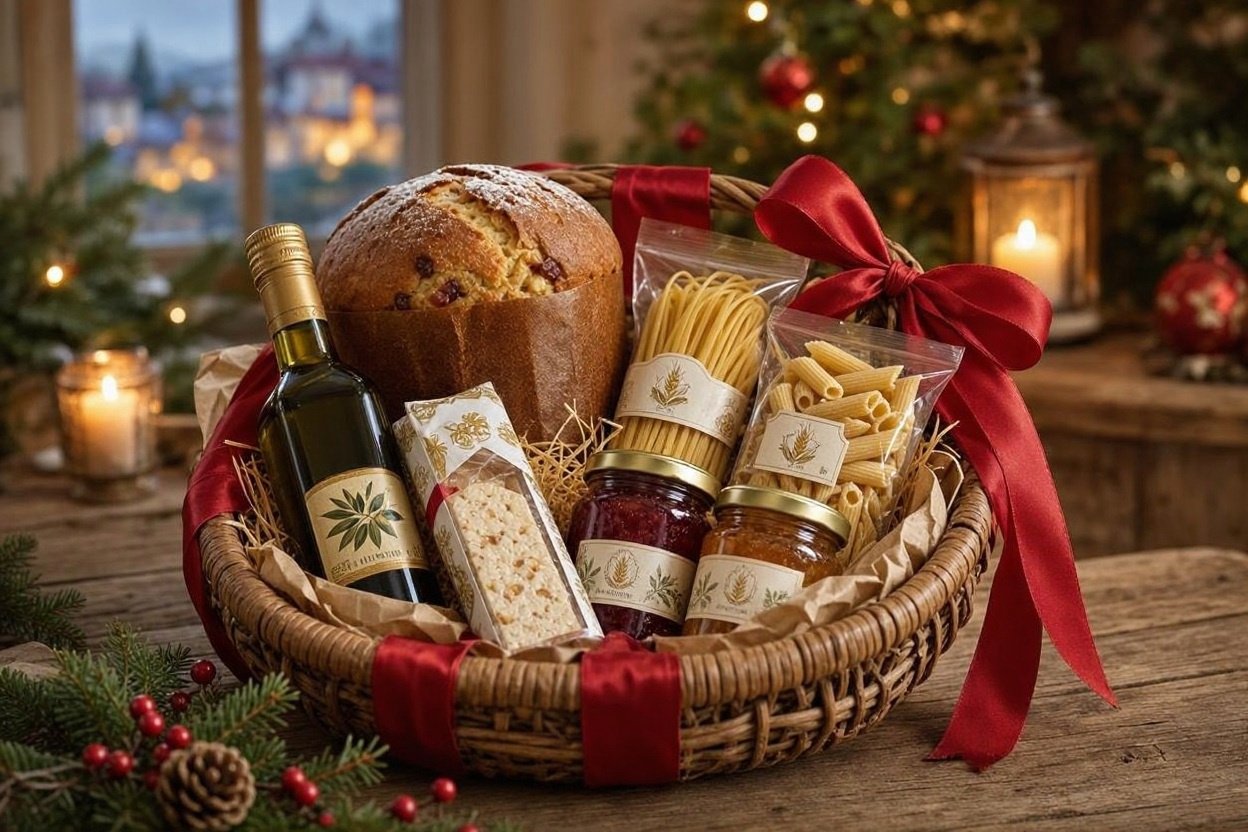
Food is an important part of Italian hospitality.
A beautifully presented selection of regional products can be an excellent present for someone who enjoys cooking or discovering new flavours.
Popular choices include:
- Extra virgin olive oil.
- Balsamic vinegar.
- Artisan pasta.
- Regional cheeses.
- Italian chocolates.
- Panettone and other traditional cakes.
- Gourmet coffee.
- Regional wines.
These gifts are especially appropriate when visiting friends or relatives.
Jewellery and Handmade Products
Italian craftsmanship is internationally recognised, particularly in jewellery, ceramics, glassmaking, and decorative objects.
An interesting example is the Presentosa, a traditional Abruzzese pendant made from gold or silver filigree.
Historically, this jewellery has carried symbolic meanings connected to love, faith, and important life events.
The Italian tourism portal explains that the Presentosa could be given as a symbol of love and that different engraved motifs represented different meanings. (Italia.it, n.d.).
Italia.it
Home and Lifestyle Gifts
Italian households often appreciate attractive and functional objects for the home.
Examples include:
- Ceramic dinnerware.
- Decorative vases.
- Coffee machines.
- Table lamps.
- Candles.
- Home fragrances.
- Kitchen accessories.
For Fashnal readers, these products fit naturally into the Home & Household category.
Coffee is particularly relevant to Italian daily life, making a coffee-related present an interesting option. Explore Coffee Machines.
Gifts for Children
Children receive gifts on several occasions throughout the year, particularly Christmas, Santa Lucia in certain regions, Easter, and La Befana.
Popular presents include toys, books, games, building sets, chocolate, and educational products.
Explore Fashnal's Kids & Family category for suitable ideas.
3. Italian Gift-Giving Etiquette: What Should You Know?
Understanding Italian etiquette can help visitors and international gift-givers avoid awkward situations.
Although customs vary between families and regions, several general recommendations are useful.
Bring something when invited to someone's home.
Wine, chocolates, or flowers are traditional options when visiting friends or relatives.
Presentation matters.
Italians often appreciate attractive wrapping and thoughtful presentation. A gift should look as though time and care have gone into choosing it.
Remove the price label.
A gift is intended to communicate appreciation, not demonstrate how much money was spent.
Expect the gift to be opened.
It is common for presents to be opened in front of the giver, allowing the recipient to express appreciation.
Be careful when choosing flowers.
Chrysanthemums are strongly associated with funerals in Italy. Some colour associations also carry symbolic meanings, so choosing flowers carefully is worthwhile.
Avoid knives and scissors as gifts.
Traditional etiquette considers these unlucky presents.
Be thoughtful about wrapping colours.
Black and purple are traditionally associated with mourning and bad luck in some Italian gift-giving etiquette guides.
These recommendations are documented by Cultural Atlas, although individual preferences and contemporary practices can differ. (Evason, 2026).
Etiquette — Cultural Atlas+1
4. What Does Consumer Research Reveal About Italian Gift-Giving in 2026?
The 2026 Christmas shopping season provides some particularly interesting information about Italian consumers.
Two recent surveys offer useful insights, although they measure different things.
How Much Do Italians Plan to Spend on Christmas Gifts?
According to a survey commissioned by Facile.it and conducted by mUp Research between October 28 and November 1, 2026, Italians planned an average Christmas gift budget of:
Average planned Christmas gift budget
€316
Per person · Christmas 2026 · Gifts only
Average planned number of gifts
6
Average planned gifts in 2025
7
Survey of 2,012 Italian adults aged 18–74. These are intentions, not final expenditure. Source: Facile.it / mUp Research, November 10, 2026. Facile.it+1
The research also found that approximately 4.6 million Italians had already purchased Christmas gifts by early November.
This represents almost 11% of the adult population covered by the survey.
Another interesting finding was that approximately 5.1 million people expected to wait for their annual additional salary payment, known as the tredicesima, before completing their Christmas shopping.
This suggests that some households were spreading their gift purchases across several months to manage their budgets.
What Categories Are Consumers Planning to Buy?
Accenture's 20th Annual Holiday Shopping Survey provides another useful perspective.
According to the Italian results reported in November 2026, the planned spending categories included:
Italian Christmas shopping preferences
Clothing & accessories
53%
Food & beverages
48%
Beauty & personal care
42%
Percentages indicate surveyed shopping-category preferences, not shares of completed retail sales. Source: Accenture Holiday Shopping Survey 2026, Italian results reported by Engage, November 16, 2026. engage.it+1
Accenture also reported an average planned holiday shopping budget of €351 per Italian respondent, 19% lower than the previous year.
Importantly, this figure covers broader holiday shopping, not exclusively presents. It should not be confused with the €316 gift-only budget from the Facile.it survey.
Both surveys describe consumer intentions. They do not establish how much Italians ultimately spent.
As of November 29, 2026, Christmas 2026 has not yet taken place, so final actual Christmas retail spending cannot be reported.
The difference between these two surveys is itself informative: when studying consumer behaviour, it is essential to understand exactly what a survey measures before comparing its numbers.
5. Does Gift-Giving Strengthen Relationships?
Gift-giving has an important social function. It can communicate affection, gratitude, recognition, and emotional commitment.
However, academic research suggests that not all gifts create the same emotional response.
Several peer-reviewed studies provide interesting insights.
Experiential Gifts Can Strengthen Social Connections
A study by Cindy Chan and Cassie Mogilner, published in the Journal of Consumer Research in 2017, investigated whether experiential gifts or material presents are more effective at strengthening relationships.
The researchers examined actual gift exchanges in real-life relationships.
Their findings showed that experiential gifts produced greater improvements in relationship strength than material gifts.
The explanation was connected to the emotions recipients experienced while enjoying the gift.
In other words, a concert ticket, a memorable dinner, a trip, or a creative workshop may create a stronger emotional connection than an object alone.
Interestingly, the effect was found even when the giver and recipient did not consume the experience together. (Chan & Mogilner, 2017).
UCLA Anderson School of Management
This research is particularly relevant to Italian culture, where meals, family gatherings, and shared experiences play important social roles.
Practical Gifts Can Make People Feel Closer
A study by SoYon Rim and colleagues, published in Personality and Social Psychology Bulletin in 2019, examined the relationship between practical gifts and emotional closeness.
The researchers found that recipients sometimes felt psychologically closer to people who gave them practical, easy-to-use presents than to those who selected gifts based primarily on attractiveness or desirability.
This suggests that understanding someone's real needs can communicate care and consideration.
For example, a coffee machine for someone who enjoys making coffee every morning may be more meaningful than a decorative object they rarely use. (Rim et al., 2019).
Sage Journals
Expensive Presents Do Not Automatically Create Greater Appreciation
Another influential study by Francis Flynn and Gabrielle Adams, published in the Journal of Experimental Social Psychology in 2009, examined the relationship between gift prices and recipients' appreciation.
The researchers found an important difference between gift-givers and recipients.
Gift-givers tended to believe that more expensive presents would be appreciated more.
However, recipients did not report the same relationship between the price of a gift and their actual feelings of appreciation.
This finding suggests that understanding the recipient's interests may be more important than choosing the most expensive option. (Flynn & Adams, 2009).
GSB Preserve
A New 2026 Study Adds an Interesting Perspective
Research published in Family Relations in April 2026 examined how material and experiential gifts influence marital satisfaction.
The researchers conducted three experiments involving 403 participants.
Unlike some earlier research, the study found that material gifts produced greater improvements in marital satisfaction than experiential gifts in the experimental conditions examined.
The researchers also identified emotional intensity and individual differences in self-construal as important factors.
This does not invalidate the earlier research. Instead, it suggests that the effect of a gift depends on the relationship, the recipient, and the context in which the gift is given.
A lasting physical object may carry a particularly meaningful message within a marriage, while an experience may be more effective in strengthening other types of relationships. (Liang et al., 2026).
Wiley Online Library
The overall lesson is simple: the most meaningful gift is not necessarily the most expensive or fashionable one. It is the gift that communicates understanding.
6. Five gift ideas inspired by Italy
The following five suggestions are suitable for an international audience interested in Italian culture, food, fashion, and lifestyle.
1. Italian Moka Coffee Maker
A traditional stovetop coffee maker inspired by Italian coffee culture. Suitable for coffee lovers and housewarming gifts.
Amazon US – Moka Coffee Makers · Compare on Fashnal: Coffee Machines
2. Italian Regional Cookbook
A cookbook featuring regional Italian recipes, traditional pasta dishes, desserts, and family cooking.
Amazon US – Italian Cookbooks · Compare on Fashnal: Home & Household
3. Italian Olive Oil Gift Set
A gourmet gift inspired by Italy's culinary heritage. Particularly appropriate for people who enjoy cooking and quality food.
Amazon US – Italian Olive Oil Gift Sets · Compare on Fashnal: Home & Household
4. Italian-Style Leather Wallet
A practical fashion accessory for birthdays, Christmas, and anniversaries.
Amazon US – Italian Leather Wallets · Compare on Fashnal: Clothing, Shoes & Accessories
5. Italian-Inspired Perfume Gift Set
A personal and elegant present suitable for anniversaries, Valentine's Day, birthdays, and Christmas.
Amazon US – Italian Perfume Gift Sets · Compare on Fashnal: Beauty & Health
Conclusion: In Italy, Gifts Are Part of a Much Bigger Cultural Story
Italian gift-giving traditions reveal a society in which family, hospitality, regional identity, and personal relationships remain important.
Christmas brings families together through food and presents. Santa Lucia and La Befana preserve distinctive regional and historical traditions. Easter offers children chocolate eggs and surprises. Weddings celebrate the beginning of a new family through gifts, bomboniere, and symbolic almonds.
Modern consumer research also shows that Italians continue to place considerable importance on Christmas shopping, even while managing household budgets more carefully.
Perhaps the most interesting lesson comes from academic research: expensive gifts do not automatically create greater appreciation, and practical or experiential presents can strengthen relationships in different ways.
A handmade object, a bottle of regional olive oil, a beautifully wrapped box of chocolates, or a memorable shared experience can all communicate affection.
Ultimately, the Italian approach to gift-giving reminds us that a present is not simply something we buy. It is a way of saying that someone matters.
Affiliate Disclosure
Fashnal participates in the Amazon Associates Program. As an Amazon Associate, Fashnal earns from qualifying purchases. If you purchase through qualifying links in this article, Fashnal may earn a commission at no additional cost to you.
More gift traditions around the world
For a short checklist, see our guide to gift-giving etiquette in Italy. Read also how gifts are given in the UK, Germany and Norway, or see all our guides to gift-giving around the world.
References
Italian cultural and consumer sources
1. Facile.it / mUp Research. (November 10, 2026). Natale: 4,6 milioni hanno già comprato i primi regali. Facile.it – Official survey announcement.
2. Accenture. (October 16, 2026). Holiday Shopping 2026: Shoppers Are Ready to Hand AI the Gift List. Accenture Research.
3. Mancuso, M. (November 16, 2026). Natale 2026, gli italiani spenderanno in media 351 euro: il 45% userà l’AI per cercare offerte. Engage. Consumer survey findings.
4. ENIT / Italia.it. (n.d.). Epiphany in Italy: Befana Meaning and Traditions. Italian National Tourism Portal.
5. Regione del Veneto / IAT Verona. (2025). Antica Fiera di Santa Lucia. Official Veneto tourism portal.
6. Turismo Roma. (n.d.). Pasqua: la colazione rinforzata romana. Rome Tourism – Easter traditions.
7. Evason, N. (2026). Italian Culture: Etiquette. Mosaica, Cultural Atlas. Italian gift-giving etiquette.
8. Iafelice, E. (June 2018). Buon Onomastico, The Italian Name Day. La Gazzetta Italiana. Italian name-day traditions.
9. Micocci, S. (May 9, 2025; updated July 13, 2026). Quanti soldi regalare a un matrimonio? Cifre e modi per non fare brutta figura. Money.it. Italian wedding gift customs.
10. Monfreda, M. (September 5, 2021). The Italian Bomboniera: A Wedding Favour, a Timeless Gift. Visititaly. Wedding favour traditions.
11. Italia.it. (n.d.). Presentosa Abruzzese: The Jewel That Symbolises Abruzzese Goldsmithing. Italian traditional jewellery.
Peer-reviewed academic research
12. Chan, C., & Mogilner, C. (2017). Experiential gifts foster stronger social relationships than material gifts. Journal of Consumer Research, 43(6), 913–931. https://doi.org/10.1093/jcr/ucw067.
13. Rim, S., Min, K. E., et al. (2019). The Gift of Psychological Closeness: How Feasible Versus Desirable Gifts Reduce Psychological Distance to the Giver. Personality and Social Psychology Bulletin, 45(3). https://doi.org/10.1177/0146167218784899.
14. Flynn, F. J., & Adams, G. S. (2009). Money Can't Buy Love: Asymmetric Beliefs About the Link Between Gift Price and Feelings of Appreciation. Journal of Experimental Social Psychology, 45(2), 404–409. https://doi.org/10.1016/j.jesp.2008.11.003.
15. Liang, S., Zhu, H., Chen, W., Deng, W., He, J., Zhou, Y., & Fu, H. (2026). How to Reciprocate with Love? The Impact of Gift-Giving on Marital Satisfaction. Family Relations, 75(3), 2092–2111. First published April 29, 2026. https://doi.org/10.1111/fare.70167.
Kommentarer (0)
Ingen kommentarer ennå. Bli den første til å dele tankene dine.
Logg inn for å kommentere